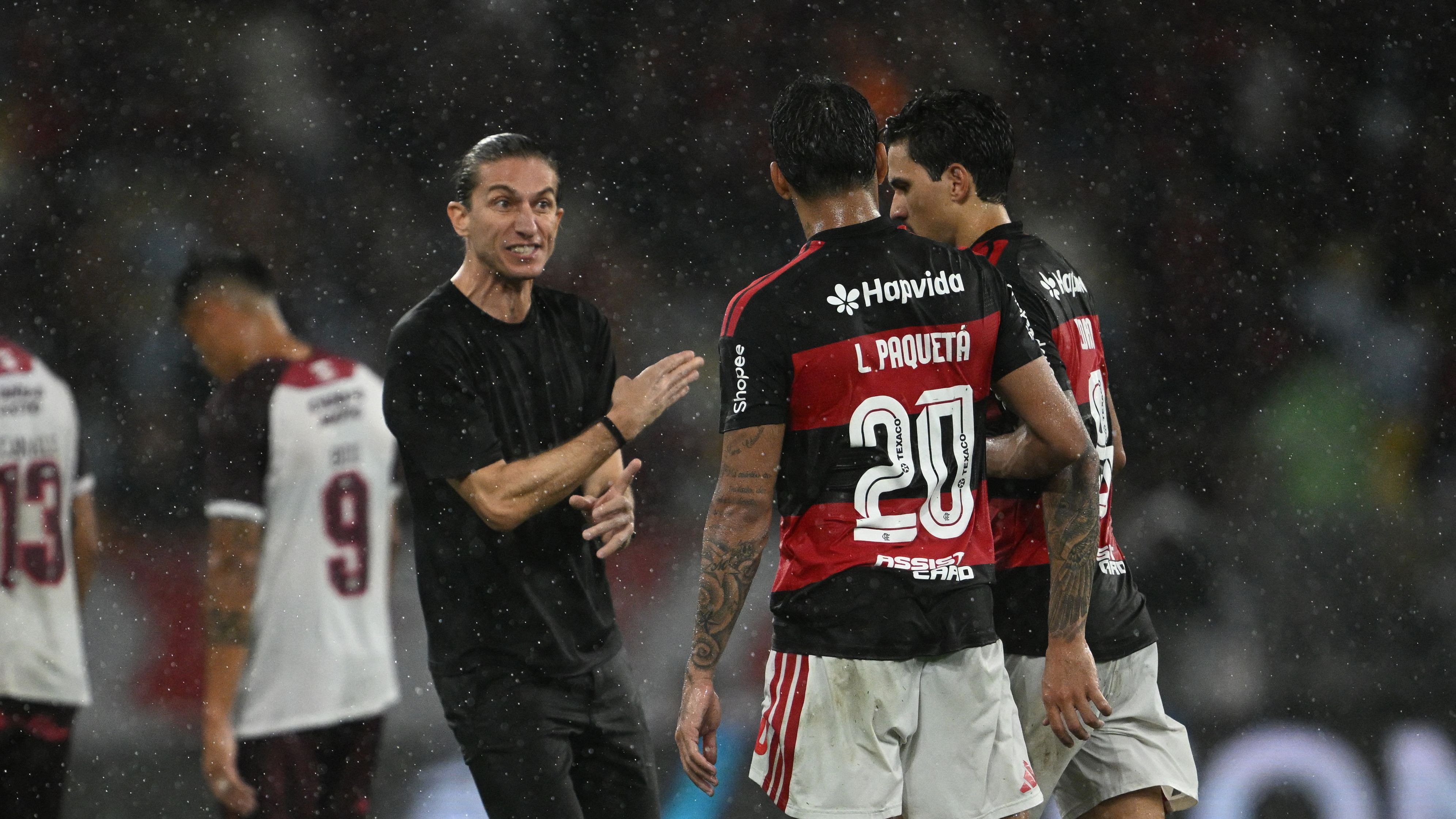
Filipe Luís's Shock Dismissal: Unpacking Flamengo's Post-Win Move
The world of football is no stranger to dramatic turns, but few events shock the sporting landscape quite like a coaching dismissal immediately following a resounding victory. Such was the case with Flamengo and their manager, Filipe Luís, whose surprise `demissão filipe luís` sent ripples through Brazilian football. Just moments after guiding the Rubro-Negra to a spectacular 8-0 triumph over Madureira, securing a coveted spot in the Campeonato Carioca final, the former player-turned-coach received the news that his tenure at the helm was over. This seemingly contradictory move underscores the immense pressure, intricate politics, and unforgiving expectations that define top-tier club management, especially at a global giant like Flamengo.
The announcement, coming on the heels of such an emphatic win, caught many off guard – not least Filipe Luís himself. While the team celebrated their dominant performance, the club's hierarchy was already orchestrating a significant shift. This article delves into the layers behind this perplexing decision, exploring the underlying reasons, the human element of the dismissal, and what it signals for Flamengo's future trajectory.
The Post-Win Shockwave: Unpacking Filipe Luís's Sudden Exit
Monday night, a jubilant Maracanã witnessed Flamengo's attacking prowess unleashed. An 8-0 demolition of Madureira was not just a victory; it was a statement, a clear pathway to the Campeonato Carioca final, brimming with promise for the season ahead. Yet, beneath the celebrations, a seismic shift was already in motion. Soon after the final whistle and Filipe Luís's post-match press conference, the club's director of football, José Boto, delivered the unexpected news: the `demissão filipe luís`.
This timing, unprecedented and stark, plunged the club into immediate controversy. For Filipe Luís, a legendary figure from his playing days with the club, the news was a profound shock. He had reportedly been left completely unprepared, denying him the opportunity to bid a proper farewell to his players in the locker room – a privilege often afforded even to dismissed managers. The club swiftly issued an official statement, a brief and formal acknowledgment of his departure, thanking him for his services but offering little insight into the abruptness of the decision. This episode serves as a powerful reminder of the cutthroat nature of modern football, where even overwhelming success in one match cannot guarantee job security against deeper-seated organizational currents.
Beneath the Surface: The Real Reasons for Flamengo's Decision
While the 8-0 victory painted a picture of competence and promise, the decision to part ways with Filipe Luís was not born out of immediate performance, but rather a culmination of simmering dissatisfactions and strategic recalculations. The club's leadership had already made up its mind days prior, revealing a disconnect between public perception and internal realities.
A Legacy of Triumph Dented by Recent Setbacks
It is crucial to contextualize Filipe Luís's managerial period. Despite his relatively short time in charge, he had overseen a period of significant achievement, including a Campeonato Carioca title, the Copa do Brasil in 2024, a Brasileirão title, and even the prestigious Copa Libertadores in 2025 (as per the club's internal records and aspirations). These achievements, coming from a club legend, should have built an unshakeable foundation. However, the unforgiving nature of top-tier football means past glories quickly fade in the face of current challenges.
The crucial turning point appears to have been the early 2026 season's disappointments. Flamengo stumbled in two significant continental showpieces: losing the Supercopa do Brasil and, more critically, the Recopa Sudamericana to Lanús just days before his dismissal. These losses, particularly the Recopa, seem to have been the final straw for the club's president, Luiz Eduardo Baptista (Bap), who reportedly decided on the coaching change immediately after the Recopa final. For a club with Flamengo's ambitions and financial power, anything less than consistent silverware at the highest level is often deemed insufficient.
The Accumulation of Pressure: Fan Discontent and Contractual Tensions
Beyond the recent trophy drought, other factors contributed to the growing pressure on Filipe Luís. Fan dissatisfaction, a constant companion for any Flamengo coach, had been mounting. Even during the impressive 8-0 win against Madureira, sections of the Maracanã crowd voiced their discontent, booing the team – a testament to the sky-high expectations of the Rubro-Negra faithful. This public display of disapproval undoubtedly weighed heavily on the club's decision-makers.
Furthermore, internal "rusgas" (frictions) regarding Filipe Luís's contract renewal process had created an underlying tension between the coach and the board. While the specifics remain undisclosed, such disagreements can erode trust and signal a lack of long-term alignment, making a split more probable when results dip. These multiple layers of pressure, from recent losses to fan and board discontent, coalesced into the decisive `demissão filipe luís`. For a deeper dive into the specific catalysts, you might be interested in
Revealed: The Real Reasons for Filipe Luís's Flamengo Dismissal.
The Human Cost and Managerial Implications
The abruptness of Filipe Luís's dismissal highlights the stark realities of professional football management. His profound surprise and the inability to say goodbye to his players in the immediate aftermath of the match paint a poignant picture of the human element involved. It's a professional courtesy often denied in the ruthless pursuit of results. He planned to visit the Ninho do Urubu training ground the following day to personally bid farewell, a testament to his bond with the squad. Along with him, his trusted technical staff, auxiliary coach Ivan Palanco and physical trainer Diogo Linhares, also departed, emphasizing the wholesale nature of such coaching changes.
This situation drew sharp criticism from football commentators, including Tiago Leifert, who famously stated that Flamengo had "afastado 100 passos de ser o Real Madrid das Américas" (moved 100 steps away from being the Real Madrid of the Americas). Leifert's critique points to a broader concern: while Flamengo possesses the financial muscle and fan base to rival European giants, their managerial instability and sometimes questionable decision-making processes undermine their aspirations for consistent, long-term greatness. True footballing dynasties are built not just on talent, but on stability, clear vision, and respectful transitions, qualities that some argue were lacking in this particular episode.
Flamengo's New Chapter: The Arrival of Leonardo Jardim
With one chapter abruptly closed, Flamengo wasted no time in opening another. The board had already been in advanced negotiations to secure a successor, even before the Madureira game. The chosen candidate to fill the void left by the `demissão filipe luís` is Portuguese tactician Leonardo Jardim, formerly of Monaco and, more recently, Cruzeiro in Brazil.
Jardim, who had taken a break from football for personal reasons since leaving the Minas Gerais club, was reportedly "seduced" by the prospect of coaching Flamengo. His representatives were already in Rio de Janeiro, holding meetings with the Rubro-Negra board prior to the decisive Carioca semi-final. Expected to arrive swiftly to finalize details, Jardim's appointment signals a clear intent from Flamengo to bring in an experienced European coach with a proven track record. His tactical acumen and ability to manage big-name players will be crucial as he steps into one of the most demanding roles in world football. For more details on the new appointment, read
Filipe Luís Out, Jardim In: Flamengo's Coaching Shift & New Era.
Lessons from the Rubro-Negra Shake-Up: What This Means for Football
The `demissão filipe luís` incident offers valuable insights into the dynamics of modern football, particularly at clubs with immense resources and expectations. It underscores several critical points:
* **The Relentless Pursuit of Silverware:** For clubs like Flamengo, winning is not enough; continuous winning, especially in high-profile competitions, is the baseline. A short dip in form or a couple of lost finals can erase a legacy of past successes in the eyes of the board and fans.
* **The Power of Perception:** Fan pressure and media narrative play an enormous role. Even an 8-0 win cannot mask underlying discontent if the club's direction is perceived to be off track.
* **The Importance of Alignment:** Disagreements over contract renewals or long-term vision can create unresolvable rifts, making a split inevitable even if immediate results are acceptable.
* **Ruthless Efficiency vs. Stability:** While swift changes can sometimes inject new energy, they also risk undermining long-term projects and stability. Clubs must weigh the immediate gratification of a coaching change against the potential for creating a volatile environment.
* **For Coaches, Expect the Unexpected:** The story of Filipe Luís is a harsh reminder for aspiring and established coaches alike: always be prepared for the unpredictable nature of the job, even when celebrating a monumental victory.
In navigating these complex waters, successful clubs strive for a delicate balance: maintaining high performance standards while fostering a stable and respectful environment for their personnel.
The `demissão filipe luís` stands as a stark testament to the unique pressures of managing one of the world's biggest football clubs. It was a move driven by a combination of recent trophy disappointments, mounting internal and external pressures, and a clear desire from the board for a fresh start. As Leonardo Jardim steps into this high-pressure role, all eyes will be on Flamengo to see if this dramatic post-win move will indeed pave the way for a more stable and consistently triumphant future, or if it merely signals another turn in the ever-turbulent world of Rubro-Negra football.